Nearshoring Electronics Manufacturing to Poland
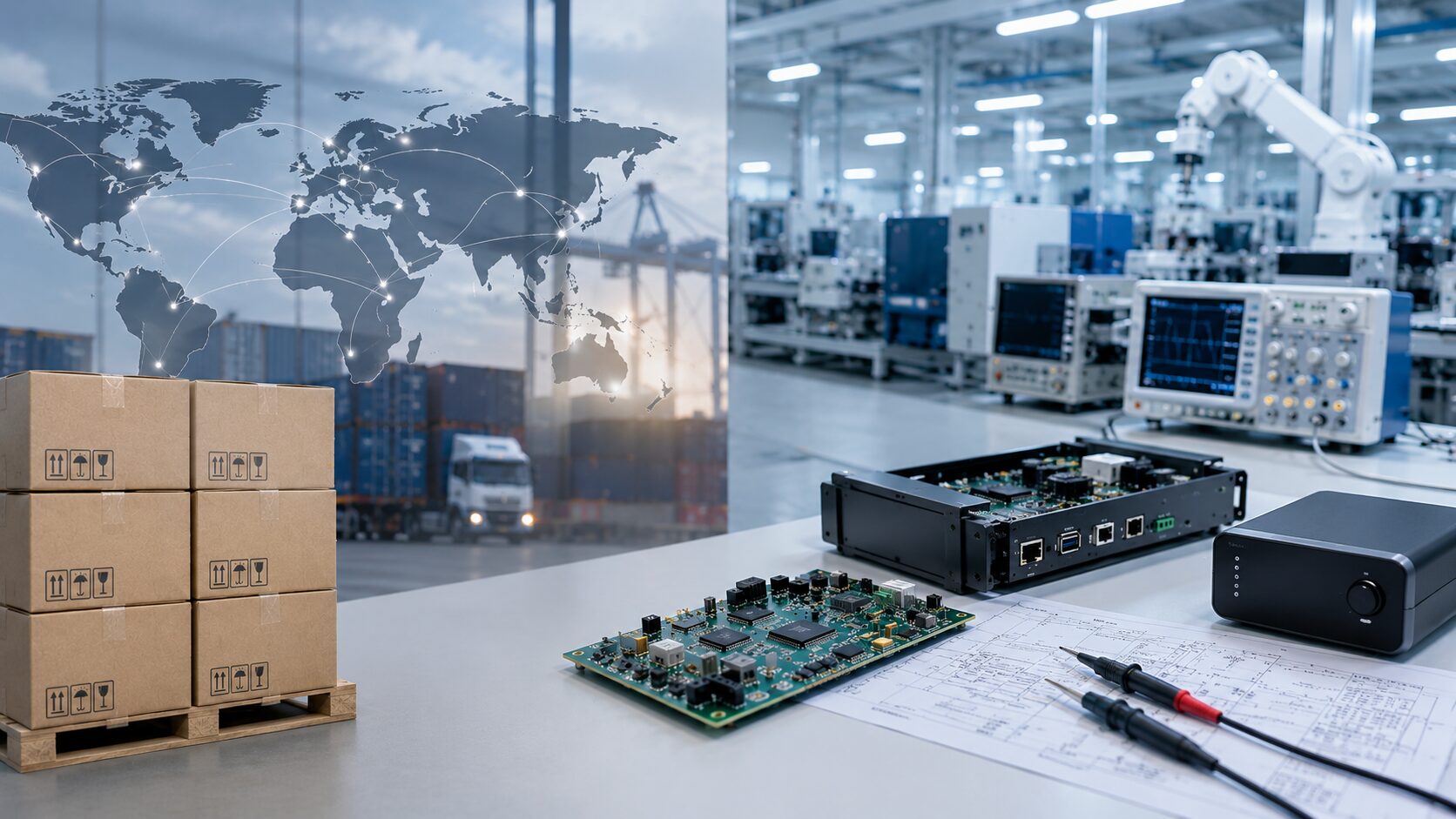
Nearshoring of electronics production is no longer solely a topic for large corporations. Following the COVID-19 pandemic, logistical disruptions, geopolitical shifts in the USA, trade tensions, and increasing pressure to protect intellectual property, a growing number of clients are not only inquiring about assembly costs but also seeking greater control over the entire supply chain.
The question is no longer solely about finding the cheapest production location. Increasingly, the focus is on: where can we achieve predictable, secure production with good communication, document protection, rapid response to changes, and a real impact on quality?
This article explores the benefits of relocating electronics manufacturing to Poland, the risks that must be assessed before such a move, and why nearshoring should be approached as a structured technical and production project, rather than a simple supplier change.
This article is intended for:
This information is intended for clients who already have an electronic product, prototype, documentation, or an existing production line and are considering a change in their collaboration model.
Typical Applications:
- Production is carried out separate from the sales market.
- Deliveries are unpredictable or excessively long.
- Supplier communication can slow down the implementation of changes.
- The client has limited visibility into quality control, testing procedures, and batch history.
- The importance of protecting intellectual property, firmware, documentation, or test data is increasing.
- The product requires frequent design modifications or variations.
- Transportation costs, inventory levels, complaints, and delays are increasingly offsetting the lower unit price.
- Clients seek a manufacturing partner located closer to their R&D teams, target markets, or decision-making centers.
If you recognize these challenges, nearshoring may be a viable option. However, this does not necessarily mean that all production should be immediately relocated. It is first necessary to understand what is truly driving costs and risks.
What is nearshoring for electronics manufacturing?
Nearshoring involves relocating part or all of the production process closer to the market, the design team, or the end customer. For European companies, this may mean manufacturing electronics in Poland instead of in Asia, or moving away from a very distant offshore model.
In practice, nearshoring of electronics production involves more than just geographic proximity. It also entails a shift in project management, leading to shorter communication channels, simplified audits, faster response to changes, and greater control over documentation, testing, components, and quality.
For some clients, nearshoring represents a complete relocation of serial production. For others, a phased approach is more suitable: prototypes, pilot series, strategic products, or variants requiring frequent modifications can be produced in Poland, while larger, stable volumes may remain with the existing supplier. It is crucial that the decision is based on risk assessment and total cost analysis, rather than simply following a trend in location.
Why COVID Changed the Way We Think About Manufacturing.
The COVID-19 pandemic demonstrated that a global supply chain, which may have functioned effectively for years, can suddenly become a source of significant risk. Factory closures, transportation restrictions, component shortages, soaring freight costs, and uncertain delivery schedules particularly impacted projects optimized solely for low unit costs.
Many customers have realized that the real challenge isn’t just the electronics assembly itself, but the lack of flexibility. When a component is unavailable, a suitable substitute must be quickly approved. When a customer requirement changes, the documentation, firmware, testing, and production process must be updated. If a production run is delayed, it’s crucial to quickly identify the specific bottleneck.
With a supplier located far away, each of these actions can take significantly longer. Time zone differences, language barriers, a lack of direct contact with engineers, and limited process visibility mean that even minor changes can become complex undertakings.
COVID-19 has not halted globalization, but it has changed the way risk is assessed. Clients are now increasingly focused on supply chain resilience, alternative component sourcing, safety stock levels, the ability to conduct rapid audits, and the availability of a local partner with expertise in both manufacturing and design.
Geopolitical shifts in the United States and their impact on the electronics industry.
A second important factor is the evolving geopolitical landscape of the United States. In recent years, the United States has increasingly viewed semiconductors, digital technologies, data, and electronics as strategic areas. This translates into increased pressure on supply chain security, export restrictions, technology controls, a “friend-shoring” policy, and the rebuilding of select manufacturing capabilities closer to trusted markets.
For our European customers, this is not an abstract policy. If a product incorporates components subject to restrictions, utilizes specific communication technologies, targets a regulated industry, or is part of a larger industrial system, geopolitical factors can impact component availability, lead times, documentation requirements, and the ability to sell in certain markets.
This is compounded by the risks of tariffs, origin controls, sanctions, changes in trade relations, and pressure to diversify suppliers. Even if a specific project is not directly affected by any restrictions, the client should be aware of the extent to which their production depends on a single region, a single logistics route, or a single supplier.
Nearshoring to Poland does not eliminate all geopolitical risks, but it can reduce certain operational dependencies. Manufacturing closer to the market facilitates document control, communication with partners, faster implementation of changes, and the development of an alternative supply chain model.
Intellectual Property Protection: Documentation, firmware, testing, and proprietary knowledge.
In electronics, intellectual property encompasses more than just schematics and PCB designs. It also includes firmware, manufacturing files, bill of materials, test procedures, production data, programming settings, quality documentation, mechanical solutions, device configuration, and the knowledge behind the design choices made for a specific product.
The more dispersed the supply chain, the more difficult it becomes to control who has access to information, where it is stored, how it is updated, and whether all versions are consistent. This problem is particularly acute when a project has been developed by multiple teams, manufactured by an external supplier, and when testing and firmware programming are poorly documented.
Nearshoring can be beneficial by reducing the organizational and legal distance between the client and the partner. It simplifies the establishment of rules regarding access to documentation, intellectual property rights, file transfer methods, change management procedures, process auditability, and responsibility for production data.
It’s important to note that location alone does not guarantee IP security. Robust measures are required, including agreements, version control, a clear division of responsibilities, access procedures, and a partner who understands that client documentation is not merely an addition to production, but one of the most critical project assets.
In practice, it’s crucial to verify several key aspects: who possesses the current source files, who has the authority to use the tooling, where the firmware images are stored, who is familiar with the programming procedures, who approves component substitutions, and whether the previous supplier holds critical knowledge that has not been documented. If the answers to these questions are unclear, the production transfer should begin with regaining control over the documentation and intellectual property.
Which products are best suited for nearshoring?
Nearshoring is not equally cost-effective for all products. It is most advantageous in situations where flexibility, control, and rapid response are critical.
Suitable products include:
- For medium to short production runs,
- with frequent design changes,
- with numerous variations or configurations.
- requiring firmware programming or calibration.
- Available for the European market.
- with high quality requirements,
- requiring final testing or integration with the enclosure.
- Subject to intellectual property protection.
- dependent on rapid engineering support,
- In situations where returns are costly or logistically challenging.
A less suitable candidate for optimization might be a very simple, stable product with a high volume, low unit value, and minimal risk of design changes. In such cases, the lowest possible production cost may remain the critical factor. However, even in these situations, it’s worth considering diversification: locating a portion of the production closer to the market, while maintaining the existing production model for the remainder.
Importer as Manufacturer: When Nearshoring Represents a Business Model Shift.
A specific scenario involves clients who previously imported finished electronic products and now wish to transition to becoming manufacturers or owners of their own products. This decision may stem from a need for greater control over quality, profit margins, availability, service, branding, device functionality, or the protection of relationships with end customers.
In this scenario, nearshoring involves more than simply relocating existing production to Poland. It represents a shift in the business model: moving from the sale of finished products to the management of the customer’s own electronic product. The client transitions from being solely an importer to taking responsibility for specifications, documentation, compliance, testing, design changes, component availability, and the product lifecycle.
This approach provides greater independence but requires a structured technical process. Simply sending a device image to a partner and expecting a local copy is insufficient. A legal and secure pathway is needed: this includes defining functional specifications, electronic design or reviewing existing designs, component selection, documentation, prototyping, testing, certification, production preparation, and New Product Introduction (NPI).
That’s when an EMS (Electronics Manufacturing Services) or design-to-manufacturing partner becomes essential. Their role extends beyond PCB assembly to encompass assisting clients in transitioning from off-the-shelf components to a product they have real control over. This includes firmware development, production documentation, final testing, enclosure design, product variations, and change management procedures.
For importers, the benefits may include increased predictability and the opportunity to develop products under their own brand. However, a risk is underestimating the scope of responsibility. Transitioning to a manufacturing role requires consideration not only of the purchase price, but also of market compliance, batch quality, service, returns, component availability, and intellectual property protection.
Therefore, it’s advisable to begin with a feasibility analysis. The initial outcome should not be a direct offer for mass production, but rather a roadmap outlining what can be developed locally, what requires a new design, the legal and technical risks involved, the necessary testing procedures, and the timeline for safely proceeding to the first production run.
Decision Map: Is Nearshoring a Viable Option?
| Customer Situation | What does it mean? | Does nearshoring offer benefits? |
|---|---|---|
| Extended and unreliable lead times. | The challenge extends beyond just manufacturing; it encompasses the entire supply chain. | Yes, a local partner can streamline communication and reduce logistical complexities. |
| Frequent product changes. | This product requires active engineering support. | Yes, particularly for New Product Introductions (NPIs), re-NPIs, and short production runs. |
| Full documentation is unavailable. | Data transfer may reveal design vulnerabilities. | Yes, but a review of the documentation is required first. |
| Very high and stable production volume. | The unit price may be a key factor. | Sometimes, we offer partial solutions, for example, for pilot series or European variants. |
| High IP risk. | Documentation, firmware, and testing are considered client assets. | Yes, if the partner provides access control, version management, and change management processes. |
| Quality issues with the current supplier. | Relocating alone is not sufficient. | Yes, this includes root cause analysis and test improvement. |
| The company, currently an importer, aims to become a manufacturer. | The responsibility for product design, documentation, and compliance is evolving. | Yes, if the partner assists in transitioning from specifications to New Product Introduction (NPI) and production. |
When is it advantageous to consider relocating production to Poland?
Consider nearshoring electronics production to Poland when unit cost is no longer the sole determining factor, and factors such as lead time, quality, communication, and control become more important.
Warning Signals:
- Lead times are difficult to predict.
- Every design change takes too long.
- Complaints are often analyzed slowly or without a clear identification of the root cause.
- The client does not have full visibility into testing and quality control processes.
- Production often requires frequent communication with the technical team.
- The product has multiple variants or is produced in short production runs.
- There is a risk associated with the protection of firmware, data, or documentation.
- Inventory costs, transportation expenses, and delivery delays are increasing.
- The project is intended for the European market and requires compliance with local regulations.
Poland is a particularly suitable location for products requiring design collaboration, New Product Introduction (NPI), testing, flexibility, and strong communication. While it may not always be the most cost-effective option for very large, stable production volumes, it can be a better choice when the cost of errors, delays, or loss of control outweighs the difference in assembly costs.
When nearshoring is not the solution.
Nearshoring is not a panacea. If a project suffers from poor documentation, an outdated Bill of Materials (BOM), a lack of testing procedures, unclear firmware versions, and undefined quality requirements, simply relocating production will not resolve the underlying issues.
In such cases, an initial project assessment phase is required. This involves determining which documentation is current, identifying approved components, understanding the final testing procedures, defining acceptance criteria, and identifying any issues encountered in previous production runs.
Nearshoring can be part of the solution, but only when combined with New Product Introduction (NPI), project audits, and production preparation. Without these elements, the client risks transferring not only the product but also all existing problems to the new supplier.
If a project is facing difficulties, it’s advisable to begin with a thorough diagnosis and a stabilization plan. This approach aligns well with the Rescue NPI 60 intervention strategy: Rescue NPI 60
Europe and Asia: More than just the price per unit.
Comparisons of manufacturing costs between Asia and Europe often begin with the unit price. While understandable, this is an incomplete picture. In electronics, the total cost of ownership (TCO) is crucial. This encompasses not only assembly costs, but also transportation, inventory, tied-up capital, shift management, returns, audits, communication, delays, quality risks, and the cost of lost sales.
A lower per-unit price can be advantageous for stable products, high volumes, and well-established processes. However, it may become less attractive when dealing with frequently changing products, requiring rapid response times, involving short production runs, demanding stringent quality requirements, or when the product is critical to the end customer.
In Europe, a key advantage often lies not in the lowest labor costs, but in a shorter decision-making cycle. It’s easier to meet with the team, conduct audits more quickly, efficiently discuss changes to the Bill of Materials (BOM), analyze complaints, or launch a pilot production run. For many projects, this flexibility offers greater value than the perceived cost savings in assembly.
How to calculate the actual cost of transferring production.
Before making a decision about nearshoring, it’s important to calculate several cost and risk factors.
The first category includes direct costs: assembly, components, testing, programming, packaging, logistics, and warehousing. The second category encompasses setup costs: documentation analysis, production data preparation, tooling, test adapters, initial production run, process validation, and any necessary corrections.
The third group, often the most significant yet difficult to quantify, represents hidden costs: delays, excess inventory, warranty claims, slow response to change requests, loss of version control, component issues, flawed testing assumptions, and client team time spent on supplier coordination.
Nearshoring becomes a viable option when the benefits of reduced lead times, improved quality, lower risk, and increased project control outweigh the difference in unit cost.
A proper Total Cost of Ownership (TCO) analysis should compare two scenarios: the current production model and a model involving the relocation of a portion or the entirety of the process to Poland. It’s important to consider not only the purchase cost but also the cost of time. If a client’s team regularly spends weeks resolving changes, addressing complaints, or dealing with component shortages, this represents a real operational cost, even if it’s not immediately apparent in the invoice price.
The greatest risks associated with transferring production.
Transferring electronics production requires careful preparation. The greatest risks typically do not stem from the assembly process itself, but from deficiencies in the input data.
Common Issues:
- incomplete production documentation,
- Variations in Bill of Materials (BOM) between the customer and the supplier.
- No approved component substitutes available.
- PCB files that do not match the actual product version.
- Tests described only in an informal manner.
- Firmware programmed by a single individual.
- No ECO/ECN change history available.
- unclear quality criteria,
- equipment belonging to the previous supplier,
- Data regarding complaints and common defects is unavailable.
Therefore, the transfer of production should begin with an audit of the documentation and process. Only then can production be responsibly costed and the first production run planned.
It’s important to remember the risk of “hidden processes.” Sometimes, a previous supplier produced correctly not because the documentation was complete, but because operators possessed undocumented workarounds, corrections, and product-specific knowledge. When production is transferred, these informal practices disappear. The new partner only sees the documentation, making the transfer a good opportunity to convert this undocumented knowledge into a controlled process.
What to avoid during production transfer.
The least effective approach is to send a package of files to several potential suppliers and wait for comparable quotes. If the documentation is incomplete, each quote will be based on different assumptions. One may not include testing, another may omit firmware programming, a third may assume different quality criteria, and a fourth may not factor in component risk.
A common mistake is rushing production without a pilot run. When a client immediately orders a large quantity, the new supplier lacks the opportunity to safely identify and address potential issues. Problems that should be revealed during a pilot phase often surface only during full-scale production.
The third mistake is treating intellectual property protection solely as a legal matter. While contracts are important, practical implementation is equally crucial: controlling access to files, version control, the method of firmware delivery, decisions regarding component substitutions, and who is authorized to modify production documentation.
The transfer process should be managed as a technical project, not as a routine procurement change.
What to prepare before discussing a technology transfer.
Before engaging with a potential new partner, it is advisable to gather a comprehensive set of information to assess the scope and associated risks.
Key features:
-
Product Description and Applications.
What is the device’s purpose, what environment does it operate in, who is the end-user, and what are the consequences of failure? -
Current technical documentation.
Schematics, PCB files, Bill of Materials (BOM), product variants, mechanical specifications, firmware description, assembly and packaging instructions. -
Production and quality data.
Volumes, defect history, complaints, test results, acceptance criteria, traceability requirements, and information on previous issues. -
Transfer Range
Whether the scope includes the entire production run, a pilot series, a specific variant, PCB assembly, final testing, programming, integration with the enclosure, or the complete device. -
Business Risks
Deadlines, cost constraints, end-customer requirements, intellectual property risks, component dependencies, and the reasons why the current model is no longer effective.
If some data is incomplete, it doesn’t preclude a discussion. It simply indicates that the initial step should be to organize the documentation, rather than immediately providing a quote for a production run.
Here’s a step-by-step overview of the production transfer process:
A successful production transfer should be structured in phases. This ensures the client understands the verification process, potential risks, and the timeline for each decision point.
Typical workflow:
-
Preliminary Qualification.
Product evaluation, volume assessment, review of available documentation, analysis of transfer reasons, and identification of key risks. -
Document review.
Verification of Bill of Materials (BOM), Printed Circuit Board (PCB) designs, firmware, test procedures, quality requirements, revision history, and data compliance. -
Plan for New Product Introduction (NPI) or Re-NPI.
Identifying areas for improvement prior to production launch: documentation, components, testing procedures, adapters, programming processes, or acceptance criteria. -
Procurement and process preparation.
Component availability verification, including substitutes, tooling, test station readiness, and production data validation. -
Pilot production run.
Production of a limited batch to validate documentation, assembly processes, testing procedures, cycle times, defect rates, and communication effectiveness. -
Performance overview and stabilization.
Problem analysis, documentation updates, change management decisions, and preparation for subsequent production runs. -
Repeatable Manufacturing.
Establish regular deliveries with version control, traceability, testing, and a defined change management process.
The biggest mistake is to treat technology transfer as a simple “file transfer.” In practice, a new partner must understand the product, the process, the testing procedures, the quality standards, and the rationale behind previous decisions.
Why NPI is Crucial for Nearshoring
New Product Introduction (NPI) is not only necessary for new projects. When transferring production, a re-NPI process is often required: a reassessment to ensure the product, documentation, and process are ready for stable production with a new partner.
This stage reveals discrepancies between documented specifications and actual production processes. Instances may include test variations from documented descriptions, component substitutions without corresponding BOM updates, or firmware programming procedures relying on undocumented operator knowledge.
Transferring production without proper NPI (New Product Introduction) processes carries significant risk. While a new supplier may be able to manufacture a product based on the provided documentation, that documentation may not accurately reflect the actual manufacturing process. Therefore, a reliable partner should inquire not only about the documentation itself, but also about the product’s history, quality issues, design decisions, and acceptance criteria.
How Inventronics Can Help.
Inventronics can assist clients with evaluating, preparing for, and launching production closer to the market. The scope of services depends on the project’s stage and may include document analysis, BOM review, testability assessment, New Product Introduction (NPI) preparation, pilot production, electronics assembly, firmware programming, final testing, and enclosure integration.
If a project is not yet well-defined, the initial step should be a thorough assessment: identifying what is complete, what is missing, potential risks, and whether the transfer can be executed without requiring design modifications. If the project is ready, the next steps involve process preparation and the production of the first batch.
For projects requiring rapid stabilization, the Rescue NPI 60 approach can be beneficial. This involves proactively identifying and mitigating risks, ensuring comprehensive documentation, and establishing a clear action plan before commencing full production. Rescue NPI 60
For more information about Inventronics’ comprehensive product development process, please see here: Inventronics product development process.
Frequently Asked Questions.
Often, a hybrid approach is the most effective. Strategic products, short production runs, pilot series, or projects requiring frequent modifications can be located closer to the market, while stable, high-volume production can remain within the existing framework.
The unit price may be higher than in the most cost-effective offshore locations. However, it is necessary to calculate the Total Cost of Ownership (TCO), which includes factors such as transportation, inventory, delays, complaints, team time, quality risks, change costs, and intellectual property protection.
It’s advisable to initiate discussions, but it’s generally not recommended to immediately begin mass production. First, it’s crucial to identify any discrepancies and ensure that the documentation accurately reflects the actual product.
It is essential to establish ownership of documentation, tooling, firmware, test data, and production files. Version control, access restrictions, change management procedures, and clear contractual agreements are also crucial.
When a project is delayed, documentation is incomplete, quality issues arise, or a client is unsure whether a product can be safely transferred to a new partner.
Summary:
Relocating electronics production to Poland is more than just a change of location. It’s a strategic decision to gain greater control over product development, documentation, quality, communication, intellectual property, and supply chain risk.
COVID-19 highlighted that overly long and inflexible supply chains can halt even well-designed products. Geopolitical shifts in the USA have demonstrated that electronics and semiconductors are strategically important areas. The increasing importance of intellectual property protection underscores that documentation, firmware, and production data are integral to a client’s competitive advantage.
Therefore, the decision to pursue nearshoring should not be based solely on the per-unit price, but rather on the total cost, risk assessment, and the partner’s ability to reliably manage the project. A well-planned transition can reduce communication overhead, increase predictability, and facilitate product development in subsequent versions.
Talk to Inventronics about nearshoring electronics production to Poland. We will assess your project stage, documentation, risks, NPI scope, and identify the safest path for transferring your production closer to the market.