
Industrial LCD and LoRaWAN Flow Meter for Remote Consumption Monitoring
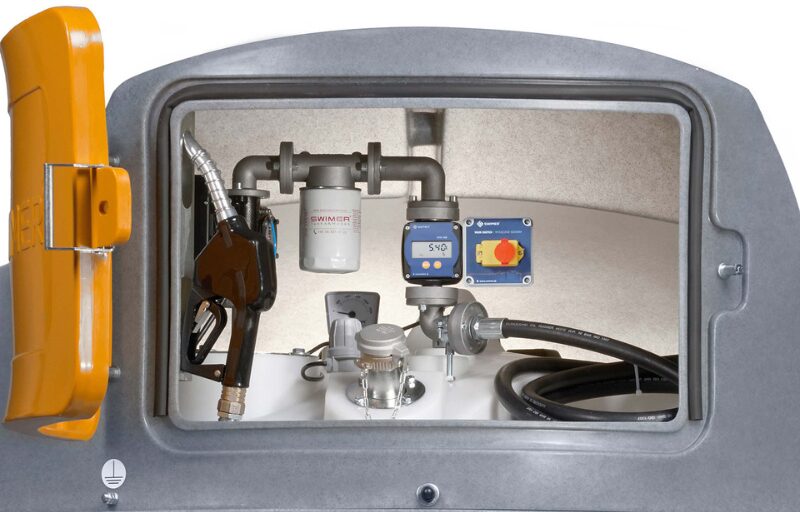
Case study: a battery-powered industrial flow meter combining local LCD measurement, firmware, LoRaWAN and remote consumption monitoring.
An industrial flow meter used in the field has to meet two requirements that often pull in opposite directions. On one hand, it should work locally, independently of network coverage, applications and cloud services. On the other hand, these devices are increasingly expected to become part of a remote monitoring system that can analyze consumption, alarms and operating history without an on-site inspection.
This case study shows the development of an LCD flow meter into the next-generation iDFM-500XL device with a large display, battery operation and LoRaWAN communication. The project combines local flow measurement, consumption logging, LCD status indication, magnetic tamper detection and remote data transmission to IoT platforms.
For an OEM manufacturer, this is an example of how a proven measurement device can be extended with telemetry without losing independent local operation. This direction fits projects where a classic electronic device needs to become part of a broader data, service and monitoring system.
If your company is developing a field measurement device, it is worth combining electronic device development with firmware, wireless communication, production and service requirements from the start.
Project Summary
| Area | Scope |
|---|---|
| Project type | Battery-powered industrial flow meter |
| Models | iDFM-500 / iDFM-500XL |
| Application | Measurement and logging of consumption in tanks and fuel installations |
| Communication | Local LCD, LoRaWAN, ISM |
| Scope of work | Firmware, hardware integration, modem communication, network configuration, transmission tests |
| Key value | Local measurement + remote monitoring without permanent power supply and without local network infrastructure |
Problem: Field Measurement and the Need for Remote Data
In many installations, a flow meter has to work as a standalone field device. The user needs a local reading, the service team needs information about device status, and the system operator wants remote access to consumption data.
Typical challenges in this type of project include:
- battery operation and low power consumption
- clear local readout in the field
- logging consumption data in device memory
- remote data transmission without Wi-Fi and without permanent mains power
- resilience to temporary loss of coverage or incorrect network configuration
- preparing the device for service, production and secure network configuration
- protection against attempts to tamper with the measurement.
Simply adding a radio modem does not solve the problem. In a battery-powered device, the radio has to be managed very carefully, data must not be lost when connectivity is unavailable, and network configuration has to be manageable in service and production processes.
Challenge: Battery-Powered Local Flow Meter with LoRaWAN
The goal of the project was to develop a new version of the industrial flow meter that keeps the advantages of a battery-powered device with a local LCD, while enabling remote data readout through a LoRaWAN network.
The main requirements included:
- a large, readable LCD for field operation
- flow measurement and local presentation of consumption values
- data logging in device memory
- transmission of consumption data over LoRaWAN
- resilience to communication errors and temporary loss of coverage
- detection of magnetic tamper attempts
- preparation for production, service and repeatable LoRaWAN configuration.
In practice, this required firmware that handles not only measurement and display, but also radio communication, data queuing, network configuration, non-volatile memory and status indication for the user.
Solution: iDFM-500XL with Firmware, LCD, LoRaWAN and Network Configuration
The project included firmware development and hardware integration for the iDFM-500XL flow meter with a LoRaWAN module. The device uses a 32-bit Arm Cortex-M0+ microcontroller, a large segmented LCD measuring 13555 mm, Hall-sensor-based measurement inputs and a LoRaWAN modem controlled through AT commands.
Key elements of the solution:
- a large LCD for local presentation of consumption, status and configuration
- LoRaWAN for data transmission from a field device without local Wi-Fi infrastructure
- radio modem activation only when there is data to transmit
- a data queue that protects consumption data when coverage is unavailable or configuration is incorrect
- transactional handling of AT commands to the radio modem
- LoRaWAN configuration stored in persistent device memory with integrity validation
- a service menu available directly from the device
- magnetic tamper detection.
This approach preserves the core function of a local device while extending it with remote telemetry. It is important in projects where the device must work independently, but data should reach the monitoring system whenever connectivity is available.
Local Measurement and Independence from the Cloud
One of the main assumptions of the project was that the flow meter must not depend on a permanent cloud connection. The device measures, displays and stores data locally, while LoRaWAN transmission is a reporting channel rather than a condition for measurement.
As a result, temporary loss of coverage, a problem joining the LoRaWAN network or incorrect configuration does not mean that consumption data is lost. Data can be stored in a queue and sent later, after transmission conditions or configuration are restored.
For the field user, this means continuity of local operation. For the system operator, it means greater resilience to typical communication problems in distributed installations.
LoRaWAN and IoT Integration
LoRaWAN is a suitable direction for battery-powered devices operating in the field, especially where there is no local Wi-Fi infrastructure and data is transmitted periodically or based on events.
In this project, the complete transmission path was verified: from the flow meter, through the LoRaWAN modem and network, to the IoT platform and data dashboard. Tests covered consumption data transmission, handling of pending messages and verification of secure network configuration mechanisms.
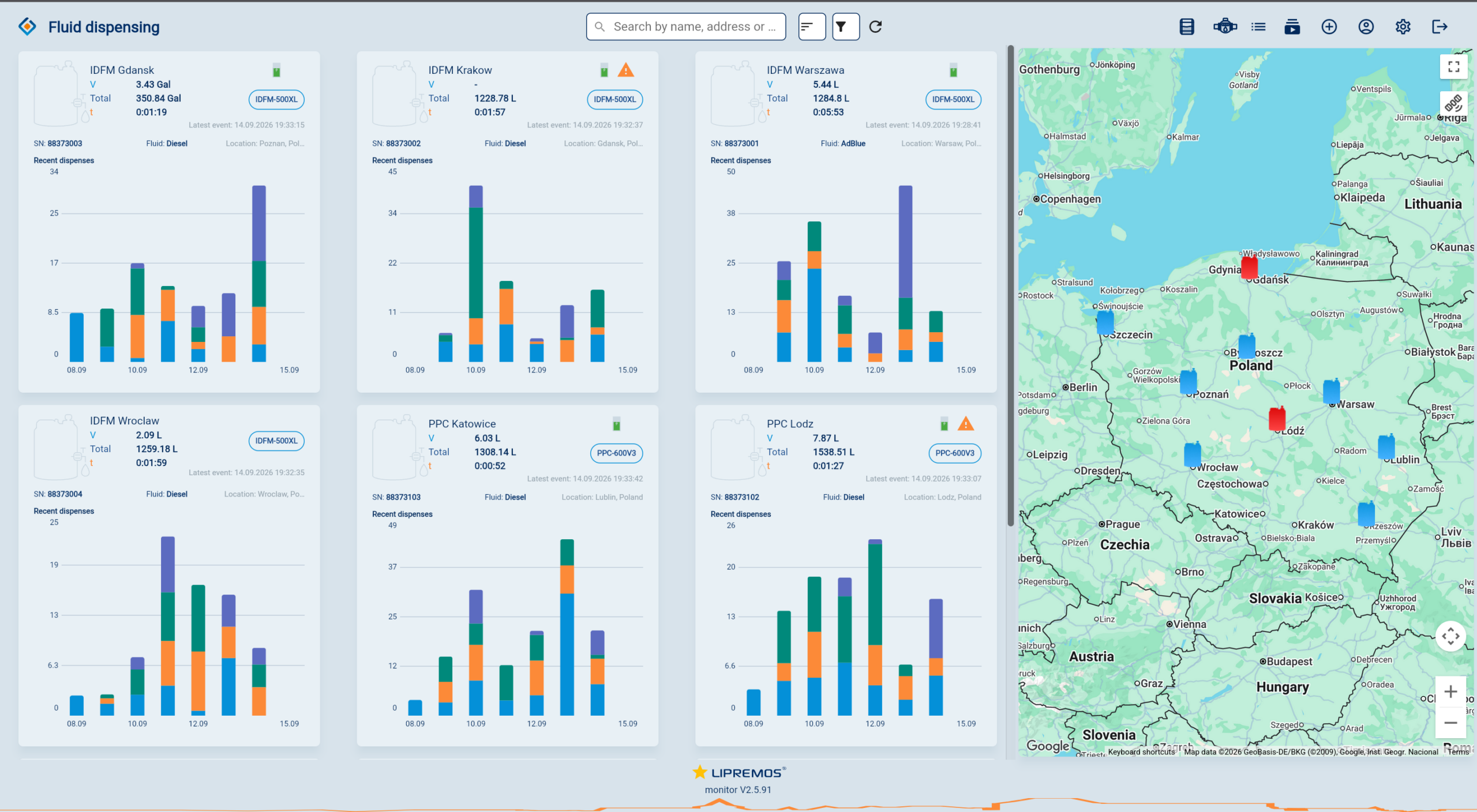
From a product perspective, three elements are important:
- device data can reach the monitoring system
- the user can see transmission status on the LCD
- LoRaWAN configuration can be prepared and verified in the service process.
This is a good example of a project where device software, radio communication and the IoT system have to be designed together, not as separate independent layers.
Operational Safety and Tamper Detection
In measurement devices, it is important not only to record data, but also to resist incorrect operation and tampering attempts.
The project included magnetic tamper detection, including situations where a magnetic field could interfere with measurement reliability. In fuel, industrial and metering applications, this is an important element of operational safety.
For the user, such events can be indicated as a status or alarm. At system level, they can become part of the device history and a basis for further service analysis.
For connected devices, cybersecurity and product maintenance after deployment are becoming increasingly important. For OEM manufacturers, an important context is the Cyber Resilience Act and CRA readiness for electronics manufacturers: from access control and updates to documentation, process evidence and responsibility for device security throughout the lifecycle.
Production and Service Readiness
In a LoRaWAN device, a working demo is not enough. Each device needs its own configuration, identifiers and network access parameters, and these have to be assigned in a repeatable and secure way.
Therefore, the project focused on:
- storing LoRaWAN parameters in persistent device memory
- validating the integrity of configuration data
- a service menu available directly from the device
- configuration and transmission status indication on the LCD
- preparation for the production process and factory tests
- configuration verification without modifying firmware code.
These elements often decide whether a prototype can be turned into a repeatably manufactured device. We describe a similar approach in the NPI process from idea to production.
Results
The project made it possible to develop a classic LCD flow meter into an industrial-grade telemetry device.
The main outcomes:
- local measurement and data presentation on a large LCD
- data transmission over LoRaWAN
- verified complete communication path to the IoT platform
- handling of real consumption data and events
- a queue of pending frames and transmission after correct configuration or connectivity is restored
- a LoRaWAN configuration menu available directly from the device
- storage and validation of device configuration data
- transmission status indication using LCD icons
- preserved battery operation by activating the radio only for transmission.
For the OEM manufacturer, the key value is the ability to develop an existing device line without losing its fundamental advantages: local operation, low power consumption and resistance to field conditions.
How a Similar Solution Can Help Your Company
A similar development path makes sense wherever a measurement device operates in the field and should remain autonomous while also delivering data to a remote monitoring system.
Example applications:
- industrial flow meters and counters
- battery-powered IoT devices
- monitoring of fuel, AdBlue, water or chemical consumption
- measurement devices for distributed installations
- LoRaWAN telemetry for industry
- OEM products that require firmware, radio communication and preparation for production.
If your company has a proven local device that you want to extend with remote communication, it is worth planning not only the radio modem, but the whole process: firmware, network configuration, tests, production, service and integration with the monitoring system.
This case naturally connects with the IoT telemetry platform, where data from field devices can become part of a broader user ecosystem, applications and services.
Summary
The iDFM-500XL shows how a classic measurement device can be developed into an IoT-ready version. The large LCD provides clear local readout, firmware manages measurement, memory and communication, and LoRaWAN enables remote reporting of consumption without permanent power supply and without local network infrastructure.
The greatest value of the project is the combination of local reliability and telemetry. The device works as a standalone flow meter, but it can also become part of a monitoring, service and data analysis system.
Do you want to develop a measurement device with LoRaWAN, firmware and remote monitoring? Talk to Inventronics about architecture, prototyping, testing and production implementation. Contact us through the contact form.
FAQ
A classic LCD flow meter shows data locally on the device. A LoRaWAN version can additionally transmit data to a remote monitoring system while keeping local measurement and battery operation.
No. In a well-designed device, data can be measured and stored locally, and transmission takes place when connectivity is available and when there is data to send.
A queue helps reduce the risk of losing consumption data during temporary loss of coverage, configuration problems or a rejected network connection attempt.
LoRaWAN configuration means preparing and storing the parameters required for the device to operate in the network. In production, this process has to be repeatable, verifiable and serviceable.
Inventronics can support the project from requirements analysis, firmware and hardware integration through prototyping, transmission tests, production preparation and further integration with a monitoring system.