
IoT Telemetry Platform for Remote Tank Monitoring
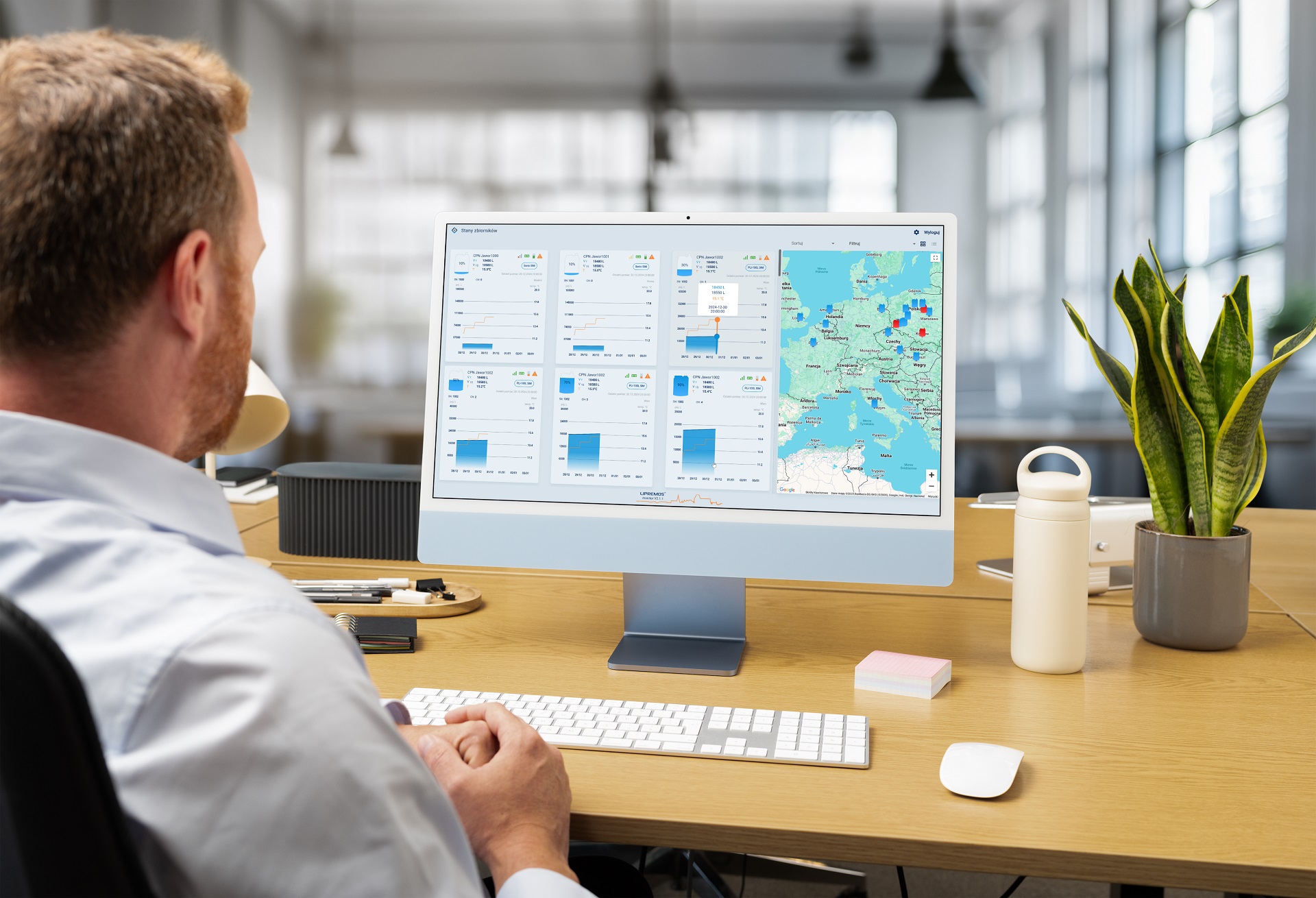
Case study: an IoT platform combining field devices, backend services, measurement history, alarms and a service-based business model.
A telemetry platform today is much more than a single sensor sending a measurement to the cloud. In many OEM projects, the real value is only realized when a field device is connected to a secure backend, a historical database, a web application, an alarm system, user accounts, and a service delivery and maintenance model.
This project demonstrates how to build a complete IoT ecosystem for remote monitoring of tanks and measurement devices. The solution combines field devices, a backend API, a time-series database, a web application, and mechanisms for subscriptions, notifications, and secure device activation.
For an OEM manufacturer, such a system means more than just selling hardware. The device can become part of an online service: with measurement history, alarms, browser access, user management, and the ability to further develop the business model.
If your company is developing an electronic device that operates in the field, collects data, and provides customers with value in a digital model, it is worth considering a similar approach even at the device design stage.
Project Summary
| Area | Scope |
|---|---|
| Project Type | IoT Telemetry Platform |
| Application | Remote monitoring of tanks and measurement devices |
| Users | Operators, service technicians, facility owners, end customers |
| System Scope | Field devices, backend API, time-series database, web/mobile application, notifications, subscriptions |
| Key Value | Transforming a measurement device into an online service with history, alarms, and a unified user ecosystem |
Problem: Dispersed Tanks and Lack of Up-to-Date Data
In many industries, tanks, installations, and measurement devices are geographically dispersed. They may operate in farms, municipal facilities, industrial plants, logistics, fuel distribution, AdBlue, water, chemicals, or other media.
The lack of up-to-date information about the level of liquid or medium in a tank causes specific costs and risks:
- Unnecessary on-site visits
- Reaction only after a problem is reported by the customer
- More difficult planning of deliveries and service
- Lack of measurement history for trend analysis
- Delayed detection of alarms, leaks, or incorrect measurements
- Lack of a single system for multiple devices operating in the field.
The level sensor alone does not solve the entire problem. The end customer needs access to data, history, alarms, and statuses. The system operator needs user management, device management, permissions, and subscriptions. The device manufacturer needs a secure activation process and the ability to further develop the service over time.
Challenge: From Measurement Device to Complete IoT Platform
The goal of the project was to create a platform that does not limit itself to presenting a single measurement. The system was designed to handle the entire data flow: from the telemetry device in the field, through the backend and database, to the application accessible to the user.
Key challenges included:
- Supporting data from level meter / sonic devices
- Storing measurement history in a way that is suitable for telemetry data
- Presenting the current status and trends
- Interpreting device alarm statuses
- Managing user accounts and access to devices
- The ability to share devices with other users
- Preparing the foundation for a subscription model
- Secure device activation by the end user
- Integration with notifications and business systems
- Maintaining the solution in an environment ready for further development.
In practice, this was a project combining the IoT layer, software, security, UX, backend, infrastructure, and thinking about the products business model.
Solution: System Combining Devices, Data, and a Web Application
The platform was designed as a complete telemetry system in which field devices provide data to the backend, and users use a web application for monitoring and analysis.
The functional scope included:
- Monitoring the level of medium in tanks
- Supporting measurement history
- Analyzing trends, deliveries, consumption, and anomalies
- Device alarm statuses
- User accounts and access authorization
- Sharing devices with other users in read-only mode
- Subscription plans and function limits depending on the plan
- Integration with payments
- Secure device activation using a code or production marking
- Notifications and communication with the user
- Monitoring the technical infrastructure.
This is important from the perspective of an OEM: an IoT product does not end with electronics. If a device is to generate value after sale, it needs an application, data, accounts, permissions, security, and a maintenance process. This type of project fits well into a broader NPI process from idea to production, because it requires parallel development of electronics, software, testing, and operational deployment.
Inventronics Scope of Work
In such a project, the value is not a single component, but the combination of several layers into a cohesive product. A telemetry platform requires simultaneous thinking about the device, backend, application, data, security, user activation, and subsequent maintenance.
The areas of expertise needed for a similar project include:
- Analysis of product requirements and user processes
- Electronics design and integration with field devices
- Backend and API architecture
- Database tailored to historical measurements
- Web application for the end user
- Responsive web/mobile layer for users and operators
- Mechanisms for accounts, roles, and access to devices
- Integrations with notifications and business systems
- Preparation of the device activation process
- Preparation of the system for maintenance, monitoring, and further development.
This is the type of project where it is worth combining product development with preparation for contract electronics manufacturing from the beginning.
Architecture: Device, API, Data, and Web Application
The platform was designed around the flow of telemetry data. Devices in the field send measurement and status data, the backend is responsible for validation, business logic, and security, and the web application presents information to end users.
In the backend layer, an API-first approach was used. The system provides a REST interface, authorization mechanisms, data validation, and support for cyclic tasks. Measurement data is stored in a time-series database, which allows for efficient handling of measurement history, charts, and trend analysis.
The web application provides access via a browser, including on mobile devices. The user can view a list of devices, analyze the details of a tank, check history, observe alarm statuses, and use functions depending on the assigned plan.
From an infrastructure perspective, the solution was prepared as a set of services running in a controlled environment. This model makes it easier to maintain, update, monitor, and develop the platform with additional types of devices or functions.
Web and Mobile Application: A Unified User Ecosystem
From the users perspective, a telemetry platform is primarily an application for daily device monitoring. The backend, database, and integrations are important, but it is the clear interface that makes the data from field devices useful for operations.
The frontend layer was designed with responsive use of the system in mind. The same ecosystem can support a web panel accessible through a browser and mobile versions for users working in the field.
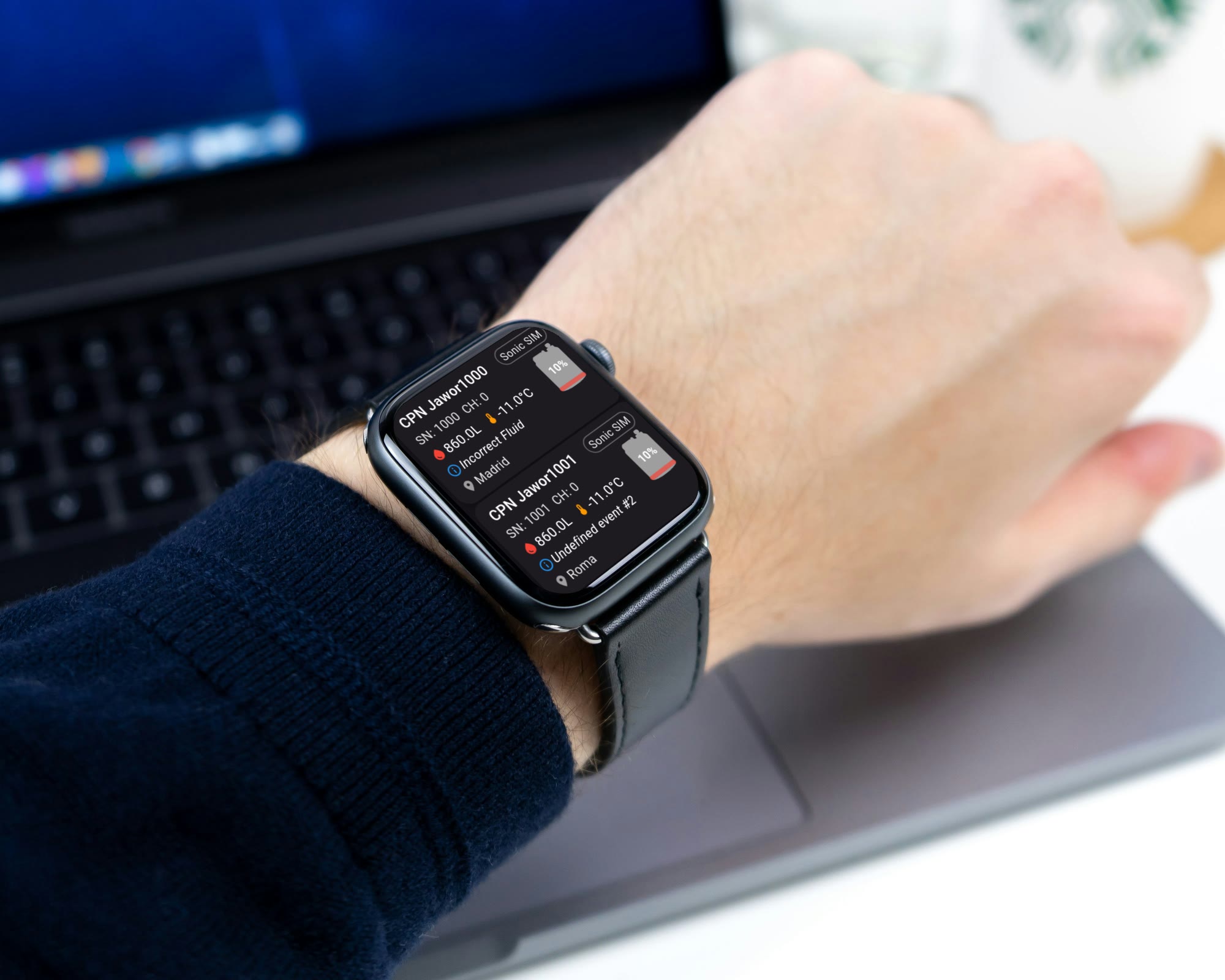
The ecosystem also includes a smartwatch application for Wear OS, giving field users quick access to tank levels, device status, alarms and location information directly from their wrist.
The most important elements of the user experience include:
- A list of tanks with current status and alarms
- Detailed device view with measurement history and technical status
- Charts of trends, deliveries, consumption, and events
- Clear status icons instead of raw error codes
- A process for adding a device with a serial number, activation code, and tank configuration
- Subscription plans and payment screens
- Support for legacy accounts and messages resulting from the subscription model
- Multilingual application support
- The ability to prepare a mobile application for service technicians, operators, and end customers.
- A Wear OS smartwatch application for quick access to tank status, alarms, key measurements and location
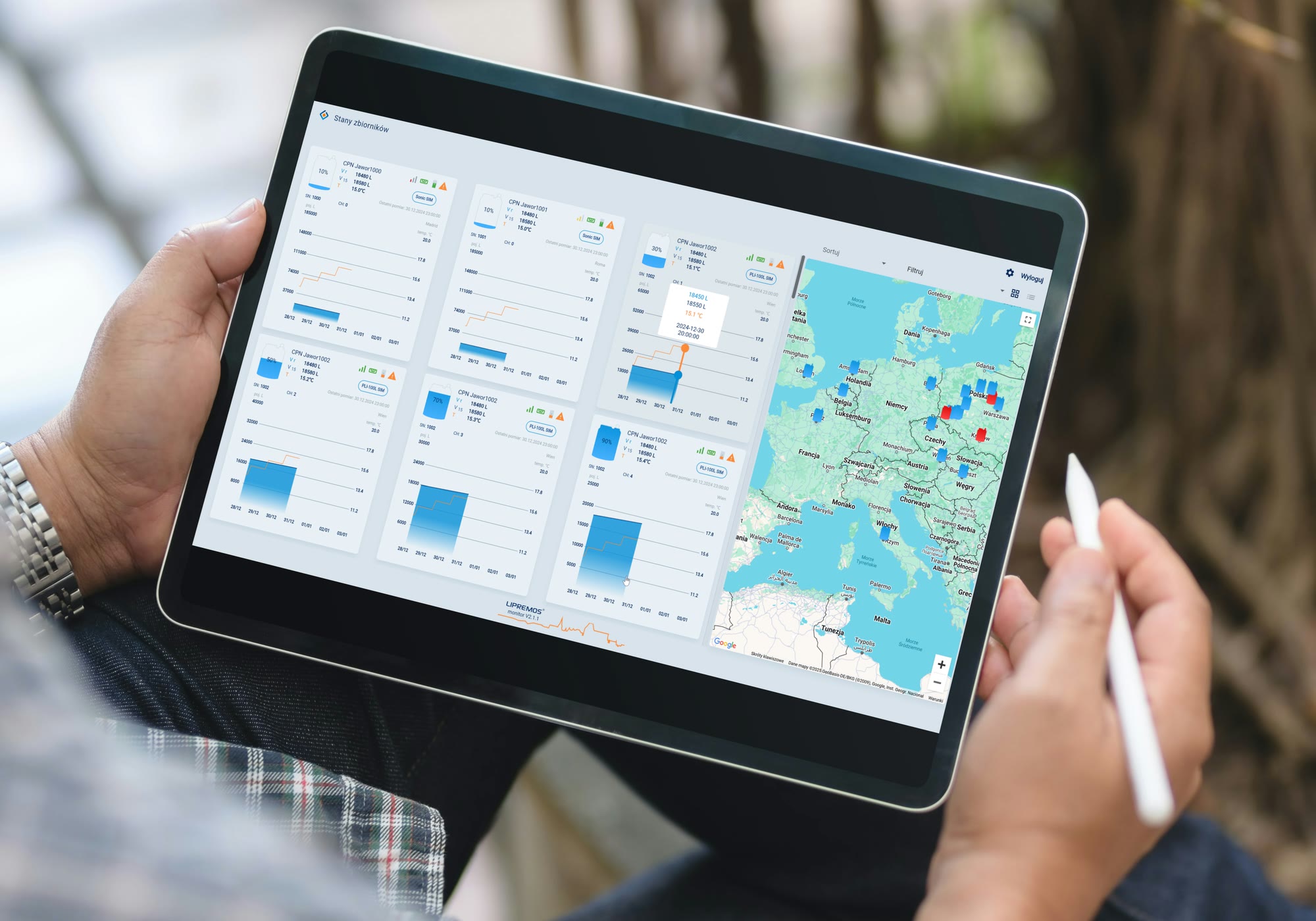
In practice, the user does not have to analyze the technical data frames or status transmitted by the device. The application shows the information in a business-understandable format: what is happening with the tank, whether an alarm has occurred, when the last measurements were taken, and whether action is required.
This is one of the strongest arguments for an OEM manufacturer. The platform does not end with an API and a database. It creates a unified user ecosystem: field devices, backend, data, web panel, mobile version, accounts, subscriptions, and notifications.
Statuses and Alarms: More Than Just a Sensor Number
In telemetry, the value of a measurement is not always sufficient. The user needs to know whether the data is correct, whether the device is working properly, and whether a reaction is required.
The platform supports device statuses that can provide information about:
- Low liquid or medium level
- Low-level alarm
- Tank overflow
- Leak detection
- Temperature or level sensor problems
- Low battery level
- Incorrect leveling
- Delivery or consumption event
- Incorrect measurement.
Thanks to this, the system is not just a panel with a chart. It helps the user quickly understand what is happening with the installation and make a decision: plan a delivery, send a service technician, check the device, or verify operating conditions.
Users, Access, and Device Sharing
In practical telemetry implementations, data from a single device may be needed by several parties. The tank owner, service provider, medium distributor, service technician and end customer may need access to the same information, but with different permissions.
Therefore, the platform includes user account mechanisms, authorization, and device assignment. An important element is the ability to share selected devices with other users, e.g., in read-only mode.
This model increases the value of the platform in B2B projects, where a device is not used by only one person, but becomes part of an operational process between several participants.
Secure Device Activation
In IoT systems, it is important not only to collect data, but also to control who can assign a device to an account. The platform is equipped with a device activation mechanism that can be linked to a serial number and a code placed on the production label, e.g., in the form of a QR code or DataMatrix.
For the device manufacturer, this is a very important element. The end user can independently add the device to their account, and the system protects against accidental or unauthorized assignment of another device.
This mechanism combines software with the production process. The serial number, label, activation, account, and telemetry data must work as a single cohesive process.
In network-connected device projects, it is also increasingly important to consider cybersecurity requirements and maintain the product throughout its lifecycle. For OEM manufacturers, an important context is the Cyber Resilience Act and preparation of the electronics manufacturer for the CRA: from access control and updates to process evidence, documentation, and responsibility for the security of the device after deployment.
Subscriptions and Service Model
The platform is designed for a service-based model. In addition to basic monitoring, it can support different levels of functionality, limits on the number of devices, the scope of historical data, and integration with payments.
This allows the manufacturer or operator to offer the customer not only a device, but a service:
- Basic access to current data
- Longer measurement history
- Larger device limit
- Extended operational functions
- Notifications and integrations
- Ability to develop the offer over time.
From a business perspective, this is an important change. The hardware becomes the entry point to a relationship with the customer, and the platform allows you to build a recurring revenue model and better serve end users.
Integrations and Notifications
The telemetry platform can be part of a broader business ecosystem. The project includes integrations with areas such as online payments, company data, notifications, and external systems.
Practical applications include:
- Low tank level alerts
- Service notifications
- Device status messages
- Subscription management
- Data exchange with company systems
- Automation of recurring administrative tasks.
Thanks to this, the solution can be developed not only as a technical panel, but as part of a customer service, logistics, service, and monetization process.
Operational Readiness and System Maintenance
In IoT projects, simply launching an application is not enough. The platform must be easy to maintain, monitor, update and develop further.
The project includes elements of operational maturity:
- Container-based environment
- Separation of backend services, frontend, database, and cache
- Technical monitoring
- Ability to run test and production environments
- Data migration planning
- Smoke tests before production switchover
- Rollback scenarios.
This is especially important when the platform replaces or develops an existing system. Migration should not mean loss of data, interruption of service, or disconnection of existing users. A well-planned implementation includes not only a new feature, but also continuity of service and operational security.
Value for OEM Manufacturers
The most important conclusion from this project is simple: in modern electronics, the value of a product is increasingly created at the intersection of hardware, software, data, and service.
A device manufacturer can offer the customer:
- Remote monitoring without on-site physical control
- Measurement history and trend analysis
- Faster detection of alarms and problems
- Fewer unnecessary service visits
- Better planning of deliveries and service
- Online access for multiple user groups
- The ability to sell the service in a subscription model
- A unified user experience in the web and mobile channel
- A foundation for additional device types and integrations.
For an OEM manufacturer, this means the opportunity to increase the value of the product, build a better relationship with the customer, and develop a business model based on service. For the end customer, it means less guessing, fewer visits, and faster reaction to real events in the field.
How a Similar Solution Can Help Your Company
A similar architecture can be used not only in tank monitoring. The same way of thinking works in many projects where devices operate in the field, collect data, and require remote supervision.
Example applications include:
- Industrial telemetry
- Monitoring of fuel, AdBlue, water or chemicals
- Water and wastewater management
- Agriculture and livestock farming
- Municipal infrastructure
- maintenance operations
- IoT devices operating with end customers
- OEM products requiring an application, backend, and a service model.
If your company has devices in the field, but lacks an application, backend, data history, notifications, or a system for customers, a telemetry platform can be a natural next step in product development.
We describe how to move from concept to a finished product in the guide From Idea to Ready Electronic Device.
Summary
The IoT telemetry platform shows that a modern electronic product can be more than just a measurement device. It can be a complete service: with data, alarms, history, user accounts, subscriptions, integrations, and operational support.
For an OEM manufacturer, this means an opportunity to increase the value of the product, build a better relationship with the customer, and develop a business model based on service. For the end customer, it means less guessing, fewer visits, and faster reaction to real events in the field.
Do you want to build a similar telemetry platform for your devices? Talk to Inventronics about the architecture, application, backend and deployment path for your IoT system. Contact us through the contact form.
FAQ
An IoT telemetry platform is a system that connects field devices with a backend, database, user application, and alarm mechanisms. It allows you to monitor the status of devices, analyze measurement history, and react to events without physical on-site control.
No. Tank monitoring is one application. A similar architecture can be adapted to other telemetry devices, industrial systems, municipal installations, agriculture, logistics or maintenance operations.
If a device collects data and is intended to be part of a service, the hardware alone is often not enough. An application and a backend allow you to provide customers with data, manage accounts, history, alarms, subscriptions, and integrations.
Important aspects include secure device activation, access control, data history, resistance to measurement errors, notifications, technical monitoring, the ability to update, and preparing the solution for maintenance.
Inventronics can support the project at the stage of analyzing requirements, designing electronics, system architecture, prototyping, preparing for production, and deploying the solution for IoT devices.