
Solar-Powered LED Road Marker: Electronics, Structure and Radio Communication
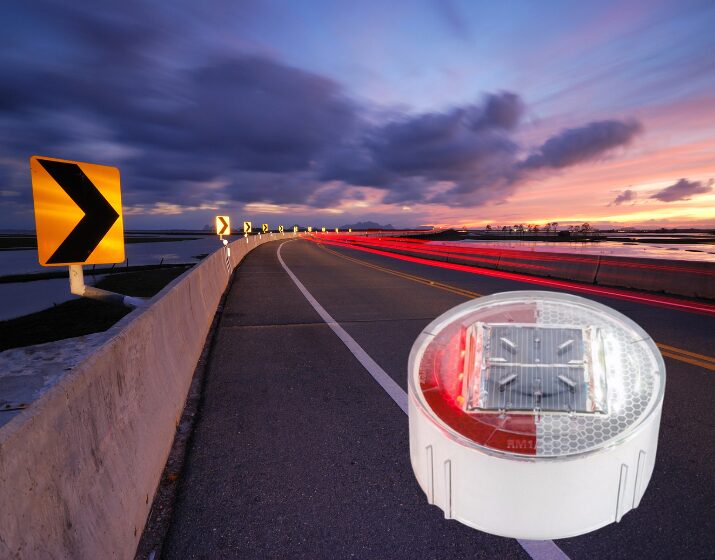
An active road marker is more than LEDs inside an enclosure. A device installed in the road surface must combine signalling, power and communication with a structure designed for vehicle wheel loads. In this OEM project, INVENTRONICS brought low-power electronics, photovoltaics and radio together with mechanical analysis and material selection. The central task was to treat these disciplines as interdependent parts of one product.
Project Summary
The marker used a microcontroller to control six LEDs. Monochrome and RGB versions were developed, supporting different lighting patterns and colour combinations. An ISM 868 MHz radio module enabled marker synchronisation, wave-like lighting sequences or simultaneous flashing, and communication with external devices.
Power came from photovoltaic cells, energy storage and low-power electronics, without an external power connection. The mechanical design used an internal honeycomb structure and polymer blends selected for road-environment requirements. The enclosure was assessed using the finite element method, with equivalent stresses evaluated according to the HMH criterion.
| Project fact | Confirmed scope |
|---|---|
| Device role | Active LED road marking designed for installation directly in the road surface |
| Signalling | Microcontroller controlling six LEDs; monochrome and RGB variants |
| Communication | ISM 868 MHz for synchronisation and support for external ISM/GPRS gateways |
| Power | Photovoltaics, energy storage and low-power electronics; overcast operation as an energy-system objective |
| Structure | Honeycomb, polymer blends and FEM analysis using the HMH criterion; IP68 as a design target |
Key outcome: the project produced a coherent active-marker design combining signalling, radio, autonomous power, mechanical engineering and material selection.
The Customer’s Challenge
The aim was active signalling installed directly in the road surface. It needed good visibility in adverse weather, operation without external power and wireless coordination between markers. Potential applications included pedestrian crossings and hazard areas, where coordinated signalling could draw road users’ attention.
The environment imposed requirements beyond electronics design. The enclosure had to accommodate loads from passing vehicles, water, UV exposure and contact with fuels, oils and other road contaminants. Long-term use therefore required geometry and material to be considered together. Putting a controller inside a sealed housing would not, by itself, address the way wheel loads travelled through the structure.
Engineering Decisions
Light control and synchronisation. ISM 868 MHz radio provided communication between markers for coordinated effects such as a travelling light wave and synchronised flashing.
The solution also supported external ISM/GPRS gateways for remote system monitoring and control. The marker handled local signalling and ISM radio communication, while the external gateway linked that communication to GPRS transmission. This separated light control and access to the remote system into distinct, cooperating functions.
An energy budget, not just a solar panel. Photovoltaic cells supplied an energy-storage system that powered the electronics, LEDs and radio. Low-power components and balancing the available energy were important design choices. The storage system was intended to sustain operation during extended overcast periods.
The general principle is to balance energy harvested over time against the energy consumed by signalling and communication. Designing a solar-powered device therefore involves considering sunlight at the installation site, lighting duration and patterns, radio activity and storage capacity. The operating profile is part of the energy requirements, not simply a choice of lighting effect.
Geometry that carries loads. A hexagonal honeycomb structure was incorporated inside the enclosure. Its purpose was to distribute loads and redirect stresses towards less vulnerable parts of the structure. This decision addressed how forces travelled through the enclosure, rather than only its external shape.
In general mechanical design, load magnitude is only part of the problem: the point of application and the load path also matter. Internal structure affects stress distribution. In this project, numerical analysis was used to assess the geometry and support enclosure-design decisions.
Material as part of the solution. Polymer blends were selected for enhanced resistance to UV, hydrocarbons, weather and mechanical loads. These criteria mattered because road contaminants and wheel pressure acted on the same enclosure. Material selection complemented the geometry: both addressed the requirements of long-term use in a road environment.
IP68 was adopted as the enclosure’s ingress-protection design target. Sealing was considered alongside material resistance and the transmission of vehicle wheel loads.
Five Interacting Device Layers
| Layer | Function in the Device |
|---|---|
| Signalling | Microcontroller controlling six LEDs in monochrome or RGB variants |
| Local radio | ISM 868 MHz for synchronisation, travelling light waves and simultaneous flashing |
| System interface | External ISM/GPRS gateway for remote monitoring and control |
| Energy | Photovoltaic cells, energy storage and low-power electronics |
| Enclosure | Honeycomb structure, polymer blends and FEM analysis supporting the mechanical design |
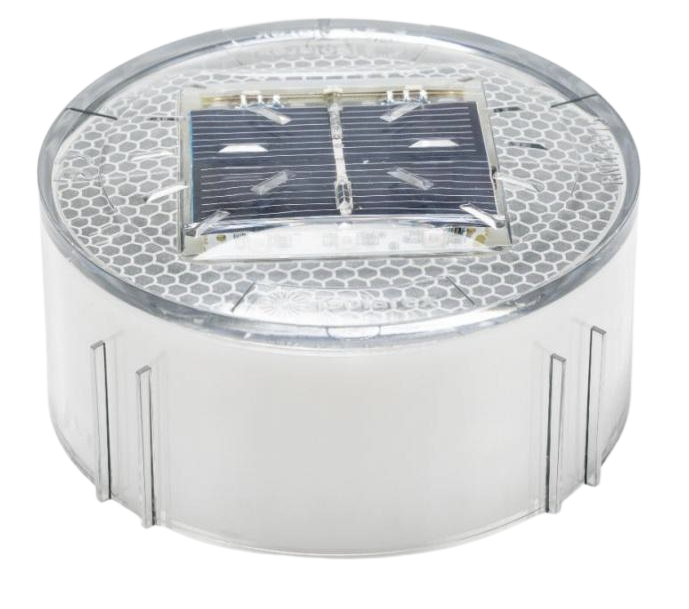
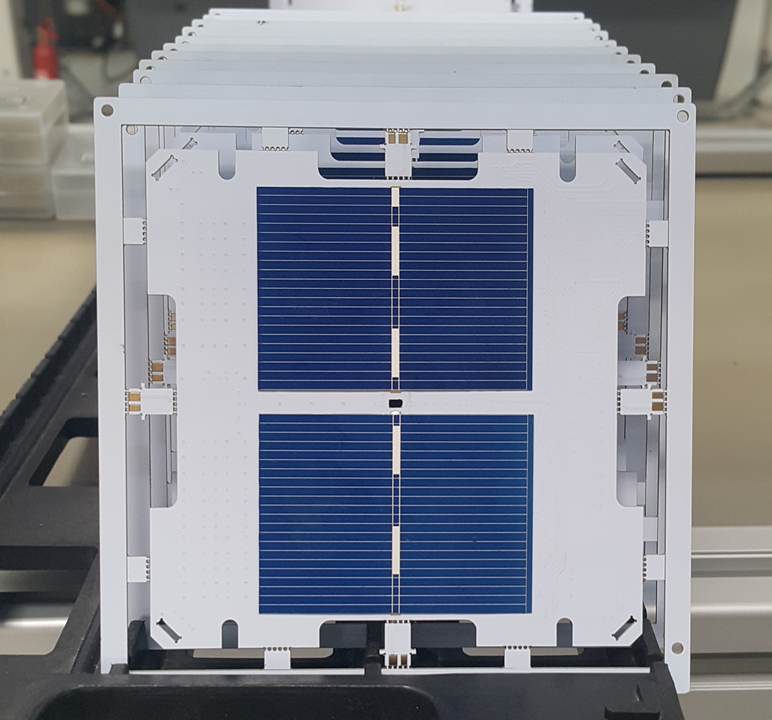
The layers were interdependent: lighting patterns and radio activity affected the energy budget, while the electronics and energy storage had to fit inside an enclosure that carried loads and operated in a road environment. Electronic, energy, mechanical and material decisions were therefore made as parts of one product.
INVENTRONICS’ Responsibilities
The work covered LED control electronics, radio communication, photovoltaic power with energy storage, and mechanical design. INVENTRONICS combined those tasks with stress analysis and enclosure-material selection. The project was therefore broader than supplying an electronic board for an existing housing.
Considering these disciplines together was important because their requirements were connected: signalling and radio shared an energy supply, while the enclosure had to address both environmental and mechanical objectives.
Mechanical Design and FEM Analysis
The enclosure was assessed using FEM, the finite element method. The analysis used equivalent stresses according to the Huber-Mises-Hencky, or HMH, criterion, which combines the components of a stress state into a single value. The analysis supported assessment of stress distribution and optimisation of enclosure behaviour under vehicle loading.
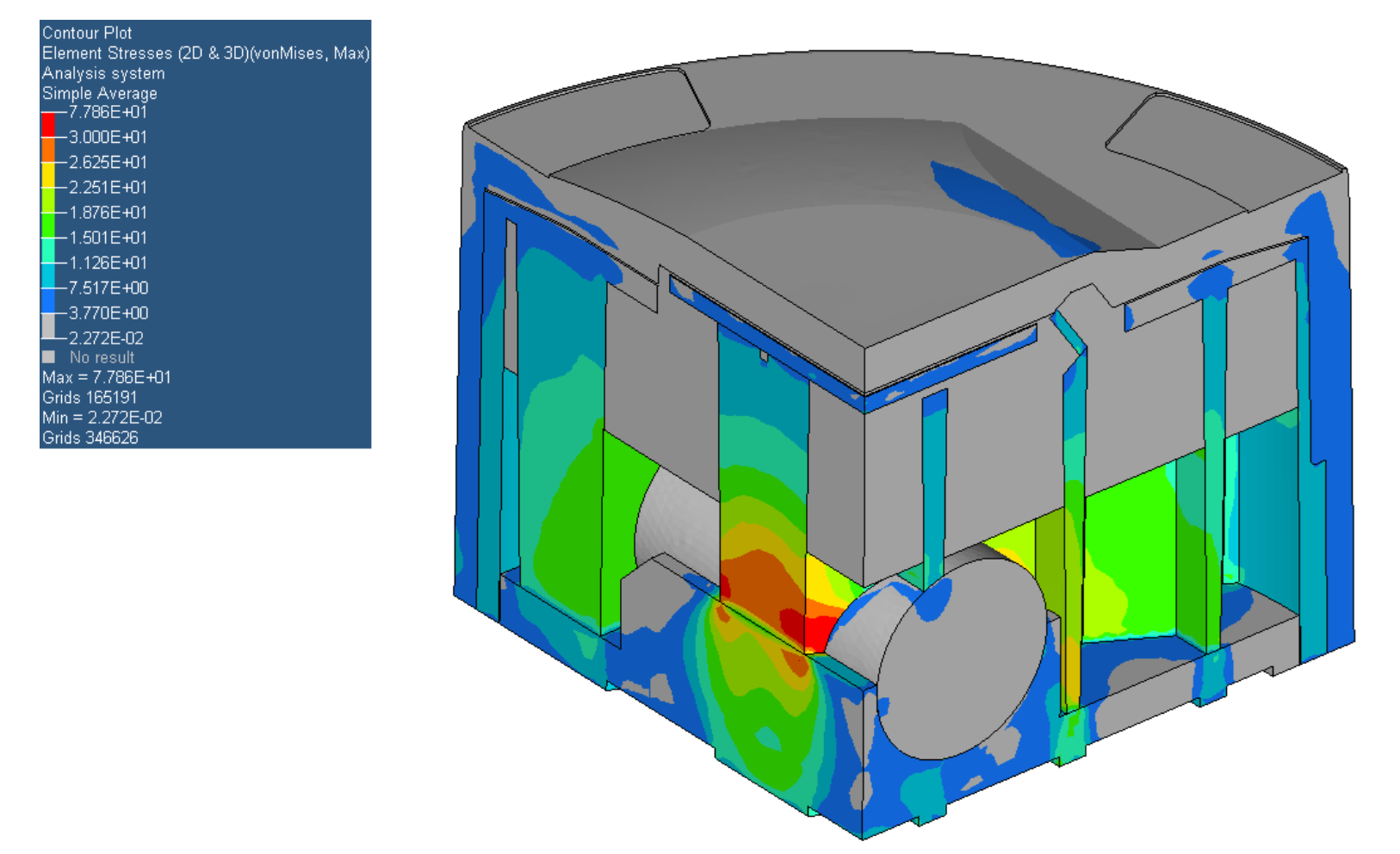
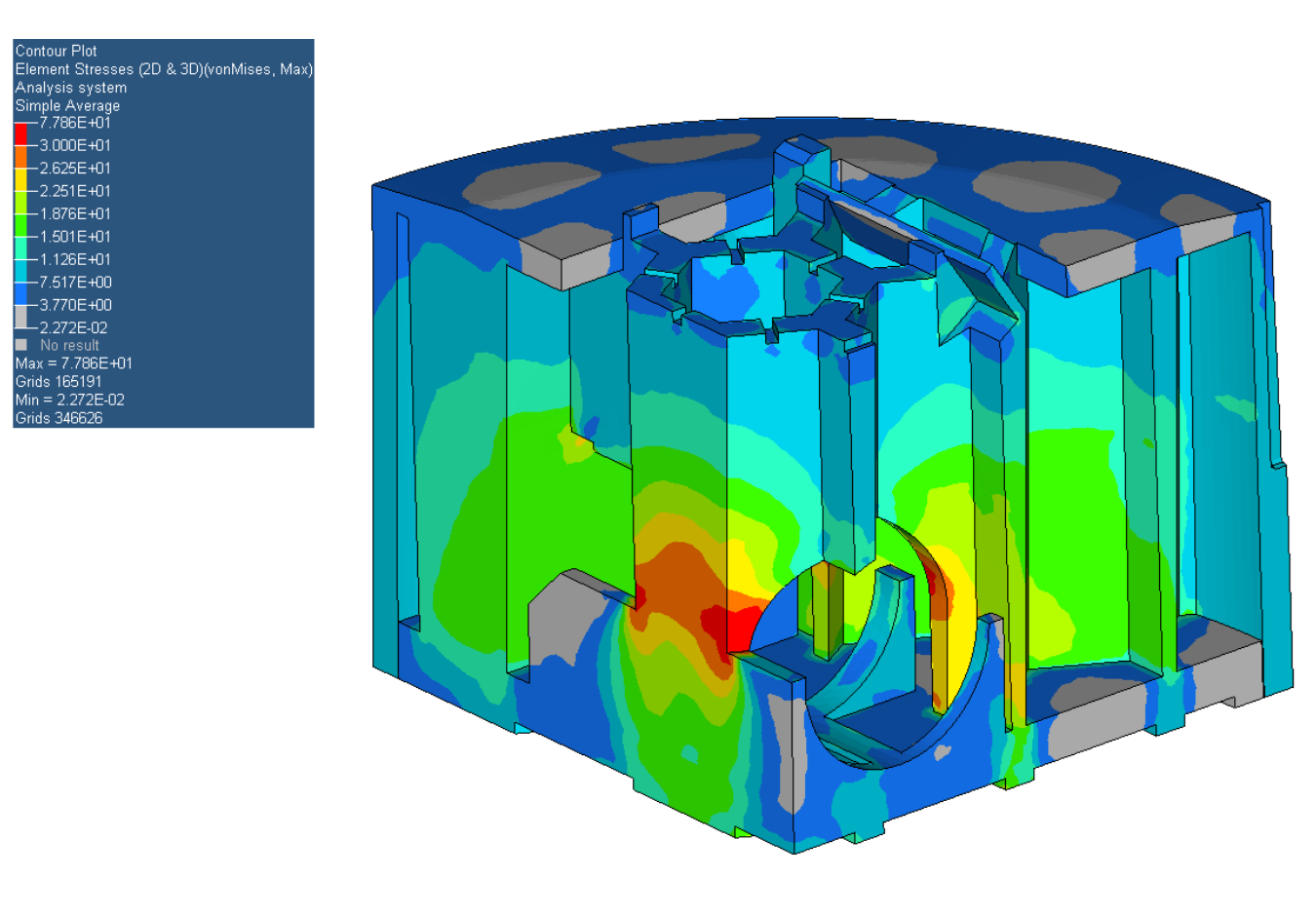
In engineering practice, FEM allows designers to examine not only the point where a force is applied, but also the areas reached through the internal load path. The material model and support conditions connect geometry with expected use. For this type of device, it is a valuable tool for assessing how the outer enclosure and its internal reinforcement work together.
Project Results
The outcome was an active marker design combining six LEDs, microcontroller control, radio synchronisation and its own photovoltaic supply with energy storage. The honeycomb structure, FEM analysis using the HMH criterion and polymer selection addressed the requirements of installation in the road surface.
Communication with external devices offered potential for integration with Intelligent Transportation Systems, or ITS. Monochrome and RGB variants, together with synchronisation, enabled different approaches to active road marking, with the aim of supporting road safety.
Value for an OEM
For an OEM, this project demonstrates the importance of developing electronics, mechanical design and materials together. Solar power must be considered alongside lighting and communication patterns, while the enclosure must be assessed against both loading and chemical exposure. None of these areas can be evaluated solely through the specification of one component.
A similar project should begin by defining installation conditions, signalling patterns, available energy, integration with a supervisory system and testing requirements. These inputs help establish device functions and finished-product acceptance criteria before components and enclosure geometry are selected.
Developing an OEM device for outdoor use? Contact INVENTRONICS with the required functions and installation conditions. Explore our product development services, bringing together electronics, mechanical design and power.
Frequently Asked Questions
The marker used photovoltaics and energy storage instead of an external power connection. Sunlight, storage capacity, lighting patterns and radio activity all matter to such a device’s energy budget. Storage was intended to sustain operation through extended overcast periods.
ISM 868 MHz communication enabled wave-like lighting sequences and synchronised flashing. Synchronisation allowed a group of markers to function as coordinated signalling rather than a collection of independently operating lights.
The honeycomb structure was intended to distribute loads and redirect stresses towards less vulnerable enclosure areas. FEM analysis supported assessment of that distribution and optimisation of the structure under vehicle loading.
Monochrome and RGB versions were developed. The microcontroller controlled six LEDs, supporting different lighting patterns and, in the RGB variant, colour combinations suited to the application.
ISM 868 MHz radio handled marker communication and synchronisation. The external ISM/GPRS gateway linked local communication to GPRS transmission for remote system monitoring and control.