
HYDROCLIMA 2: heat cost allocator manufacturing and dedicated testing
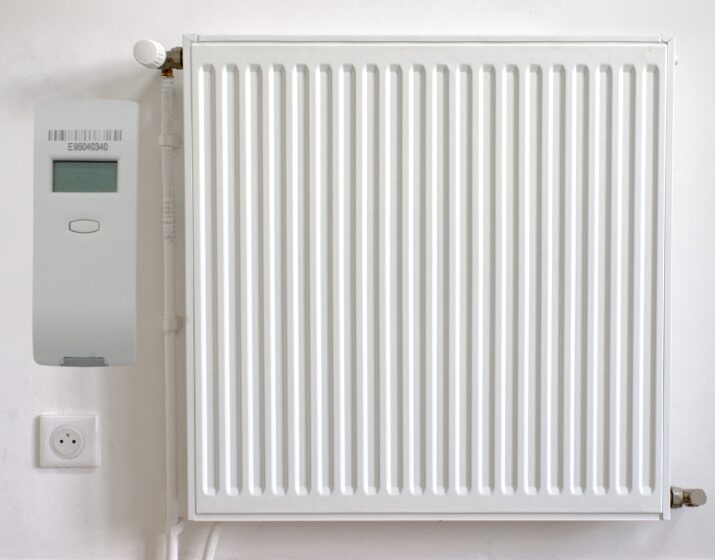
Manufacturing an electronic heat cost allocator combines PCB and mechanical assembly, firmware programming and functional checks. For HYDROCLIMA 2, INVENTRONICS developed the production process and a dedicated testing platform. The customer designed the product and supplied its proprietary firmware.
Project summary
HYDROCLIMA 2 is an electronic heat cost allocator with two temperature sensors, tamper detection and Wireless M-Bus data transmission. It is used in heating cost allocation systems, not as a heat meter measuring energy in kWh.
Series production covered electronics and mechanical assembly, final testing and packaging. It combined SMT and THT with a parametric-functional tester developed specifically for the device, resulting in a complete product manufactured to the customer’s design.
| Project fact | Confirmed scope |
|---|---|
| Product | HYDROCLIMA 2 dual-sensor electronic heat cost allocator with tamper detection. |
| Responsibility | The customer designed the device and supplied proprietary firmware; INVENTRONICS handled industrialisation and manufacturing. |
| Production | SMT/THT assembly, mechanical assembly, programming, final testing and packaging. |
| Testing | A dedicated parametric-functional tester covering sensors, power, display, interface and tamper detection. |
| Communication | Wireless M-Bus data transmission covered by production validation. |
Key outcome: the customer’s design was implemented as a complete series production process with dedicated verification of finished allocator functions.
The customer’s challenge
The customer, a metering solutions provider, needed a partner to translate its design into series production. Throughput had to be considered alongside verification of device parameters and functions. Quality assurance, traceability and the complete production cycle were also customer requirements.
A device with two sensors and radio communication required verification of several interacting areas. The platform had to cover temperature sensing, transmission, power, the display and tamper detection. The manufacturing partner’s task was to account for these functions within production of the complete allocator.
Engineering decisions: assembly and testing together
Starting from the customer’s design, INVENTRONICS developed and optimised manufacturing by combining electronics and mechanical assembly, programming and dedicated testing through to final inspection.
A key decision was to use a tester tailored to this product. Its scope matched the device’s temperature sensors, Wireless M-Bus communication, battery power and interface. This connection between test coverage and product design was central to industrialising HYDROCLIMA 2.
The process was optimised with throughput and reliability in mind. In series production, the two are connected: assembly productivity needs to be considered alongside the inspection coverage required for the device.
From Documentation to a Finished Allocator
INVENTRONICS translated the customer’s documentation into five connected stages of complete device production. Product design and proprietary firmware remained the customer’s responsibility, while INVENTRONICS handled industrialisation, manufacturing and final inspection.
| Stage | Scope of work |
|---|---|
| 1. PCB assembly | Surface-mount SMT and through-hole THT assembly of components specified in the customer’s design. |
| 2. Mechanical assembly | Combining the electronics with the enclosure, display and temperature sensors. |
| 3. Programming | Loading the customer’s proprietary firmware into the microcontroller. |
| 4. Final verification | Using the dedicated parametric-functional tester to check the complete device. |
| 5. Packaging | Preparing tested allocators for delivery. |
This connected electronics manufacturing, mechanical completion and function checks, providing OEM support from production documentation to a packaged allocator.
Testing linked to device functions
The HYDROCLIMA 2 tester combined calibration and parameter checks with functional verification. It covered six areas relevant to allocator operation:
| Area | Dedicated tester coverage | Relevance to verification |
|---|---|---|
| Temperature sensors | Sensor calibration | Addresses the device’s temperature-sensing chain. |
| Temperature response | Response testing across multiple temperature ranges | Goes beyond checking operation at a single point. |
| Communication | Wireless M-Bus validation | Covers the allocator’s wireless communication. |
| Power | Battery and power consumption diagnostics | Addresses parameters relevant to battery operation. |
| Device interface | Display and interface checks | Covers presentation and interface functions. |
| Tamper detection | Verification of detection mechanisms | Checks the tamper-detection function included in the product. |
Sensor calibration and response testing across temperature ranges covered the temperature-sensing chain. Separate tester functions addressed data transmission, display and tamper detection.
Battery and power consumption diagnostics added power verification to this scope. For a device intended for long-term battery operation, this is an important area of inspection alongside sensor operation and radio communication.
Results: a series production process
The collaboration established a complete series production process for HYDROCLIMA 2. The customer gained manufacturing capability for its own product, covering assembly, programming, final testing and packaging. The dedicated testing platform linked production inspection to allocator parameters and functions, from temperature sensors to Wireless M-Bus and tamper detection.
Value for OEMs
This model is relevant to companies developing their own devices and software while seeking an industrialisation partner. It shows why supplier assessment should consider not only assembly capability but also product-specific test engineering and the operations required after electronics assembly.
For a new project, useful starting materials include:
- Electronics and mechanical documentation needed for assembly.
- Firmware version information and programming requirements.
- Functions and parameters to be checked, together with acceptance criteria.
- Expected scope for final product completion, packaging, quantities and delivery dates.
These provide a basis for discussing responsibilities, test station scope and production arrangements with the OEM design team.
Have your own electronics design and need a manufacturing partner? Contact INVENTRONICS with your product’s development stage and expected assembly and testing scope. Let’s discuss the move from documentation to manufacturing a complete device. Explore our EMS electronics manufacturing services as well.
FAQ
The customer designed HYDROCLIMA 2 and supplied its proprietary firmware. INVENTRONICS handled industrialisation, manufacturing and development of the dedicated parametric-functional tester. Programming the microcontroller with customer software was one of the production operations.
The allocator combines two temperature sensors, radio communication, a display and tamper detection. A dedicated tester enabled product-specific verification of these areas. Its scope combined sensor calibration, parameter checks and functional testing of the complete device.
The tester covered Wireless M-Bus validation, addressing the allocator’s wireless communication. This was a separate verification area alongside sensor, power and interface tests, matching the radio data transmission function in HYDROCLIMA 2.
HYDROCLIMA 2 had a projected ten-year battery life. This is a projection, not the result of a ten-year measurement or a lifetime guarantee. During production, the tester covered battery and power consumption diagnostics: parameters relevant to operation from the device’s own power source.
Alongside SMT and THT, the scope included enclosure, display and sensor assembly, programming customer firmware, final testing and packaging. It connected electronics manufacture with mechanical assembly and preparation of the finished allocator for delivery.